


 PT
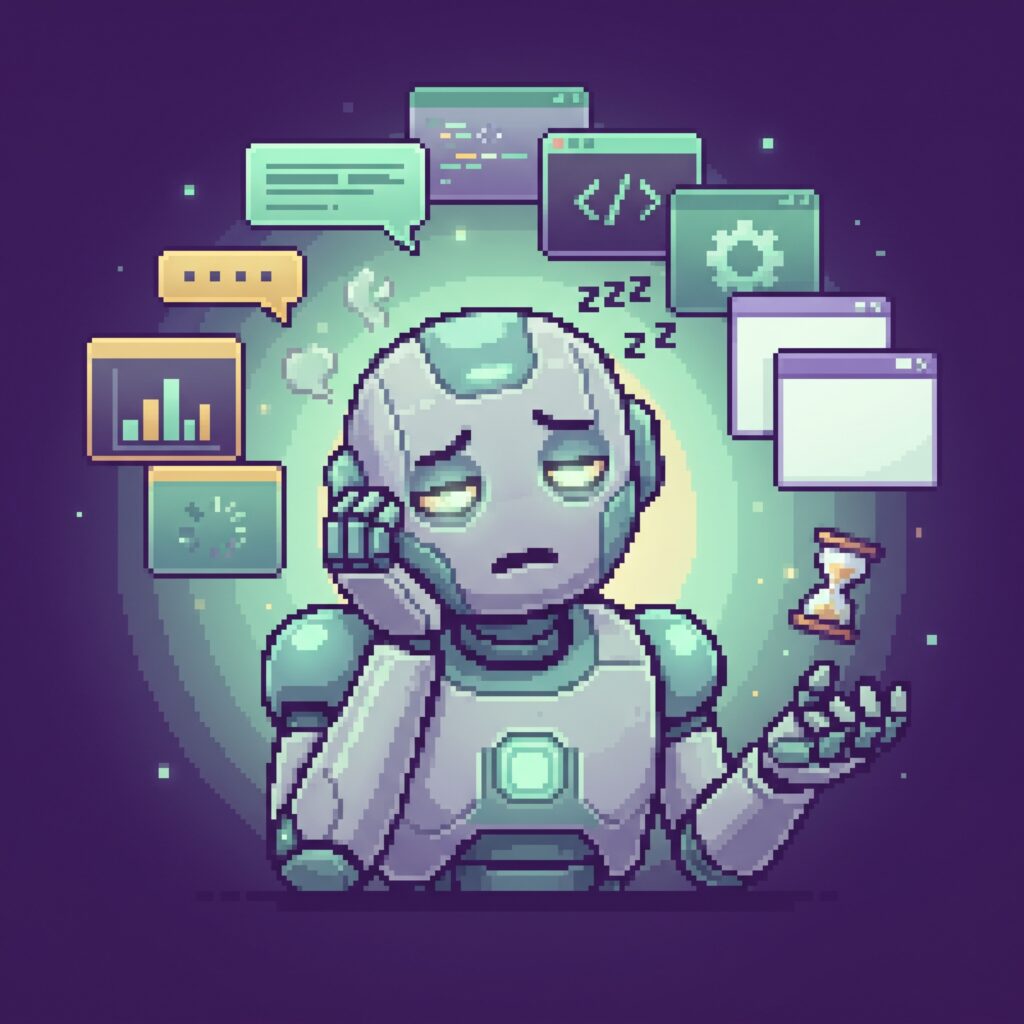
A study published by Harvard Business Review shows that the attention economy is now also measured by the time we spend coordinating digital agents and their tasks.
By José Brito, founder of Pupa Educação Digital, professor at the AI Lab of Colégio MOPI and director of JEDUCA, the Brazilian Association of Education Journalists.
Anyone who knows me knows that one of the things I enjoy most is a cup of coffee — espresso, short, no sugar, if possible — to go with a good read. I usually do it sitting on the balcony at home with my tablet in hand, reading the news every morning. I like the design of the print edition of the newspapers in their digital version. Sometimes my subscriber’s copy of Piauí, the Brazilian monthly, is there with me. On other occasions it is the books on the bedside table that are within reach.
That same set of readings does not stop me from observing the world, talking to people, checking other sources — and even relying on an AI agent that puts together a global roundup of the main headlines, cross-references them with fields I am interested in, adds a pinch of advice for my consulting business, and, on top of that, analyzes trends and opportunities in new ventures. None of this by chance. It was given instructions that were exhaustively thought through at some recent point on the timeline of our open relationship with AI tools. Probably while I was having another coffee.
Quote of the week
“Technology has always fed the illusion that we are multitaskers, but AI now takes that delusion to another level. The fashion is to coordinate different agents and models in the hope of gaining productivity — at an absurd mental cost.”
Diogo Cortiz — cognitive scientist, professor at PUC-SP and columnist for UOL.
Supervising AI and what else is in Radar Pupa issue 33
- Brain fry: supervising AI is tiring too
- New AI course on AVAMEC built on UNESCO frameworks
- Waning interest in news is a warning sign for the fight against disinformation among young people
- Amy Bruckman and the reinvention of the classroom with AI
- NotebookLM joins the short-video wave with a new audiovisual feature for text documents
Reading tip
Grande Sertão: Veredas (70th anniversary edition), by João Guimarães Rosa (Companhia das Letras, 2026). Available in Portuguese.
At Pupa, this topic is part of PUPA MAX, for companies, teams and institutions.
Read the full issue 33 on Radar Pupa (in Portuguese)
Radar Pupa is José Brito’s weekly newsletter on learning with AI, digital culture and the future of work. Subscription is free.
This post was prepared and reviewed with AI automations by Claude Cowork, based on José Brito’s original issue on Substack.