


 PT
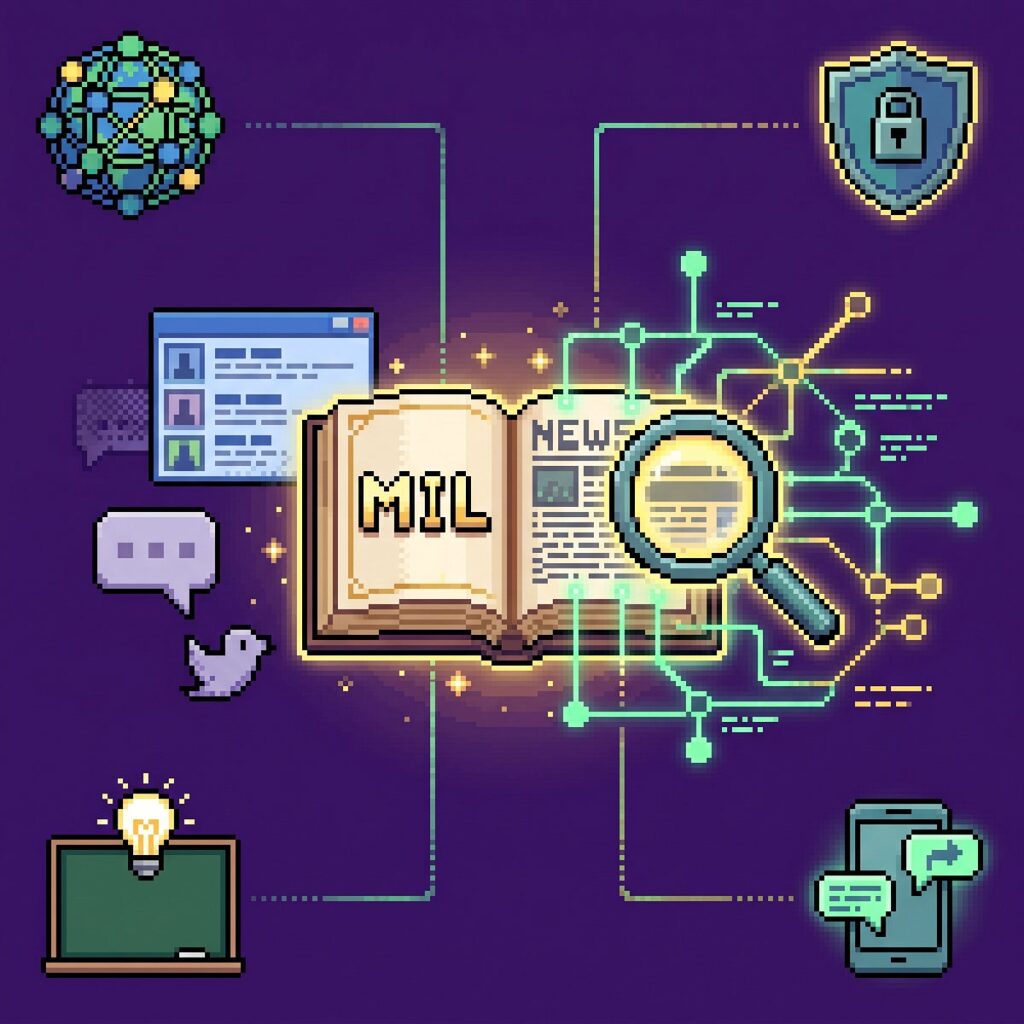
Media literacy is the commitment UNESCO placed at the center of Global MIL Week 2026. The network Pupa belongs to is now organized into 16 regional and thematic chapters.
By José Brito, founder of Pupa Educação Digital, teacher at the AI Lab of Colégio MOPI and director of JEDUCA, the Brazilian Association of Education Journalists.
UNESCO’s media literacy work has a new structure in 2026. The Global Council of the MIL Alliance, a network of more than 700 institutions in 110 countries, approved 16 chapters: 8 regional ones, including Latin America and the Caribbean, and 8 thematic ones, from artificial intelligence to families, cities and youth engagement.
The Global MIL Week campaign brought governments, schools, platforms and the press together around information integrity. In Brazil, the 4th Brazilian Media Education Week, run by Secom (the federal Secretariat of Social Communication) and the Ministry of Education with UNESCO cooperation, took place from November 4 to 10. Pupa is a member of the alliance.
Quote of the week
Without facts, there is no truth. Without truth, there is no trust. Without all three, there is no shared reality.
Idea from Maria Ressa, co-founder and CEO of Rappler and Nobel Peace Prize laureate, cited by CNN journalist Christiane Amanpour in UNESCO’s MIL Week 2026 campaign. Paraphrased: Ressa has phrased it in slightly different words across her talks.
Media literacy and UNESCO: what else is in issue 46
- Meta reaches a settlement of up to US$18 billion in a case over teen social media addiction, with screen time limits and notifications silenced during school hours.
- NIC.br, the Brazilian Network Information Center, listens to public school students in São Paulo at its 11th Symposium on Children and Adolescents on the Internet.
- Firjan, the Rio de Janeiro State Federation of Industries, discusses professional training and the division of work between humans and AI agents.
- JEDUCA announces its 8th Education Journalism Grant: 13 journalists from 9 Brazilian states.
Reading tip
The Chaos Machine, by Max Fisher (Brazilian edition: A máquina do caos, Todavia, 2023). The journalist shows how social media recommendation systems shaped behavior and politics, a timely read for a week dedicated to media literacy.
Read the full issue 46 on Radar Pupa (in Portuguese)
Radar Pupa is José Brito’s weekly newsletter about learning with AI, digital culture and the future of work. Subscription is free.
This post was prepared and reviewed with AI automations by Claude Cowork, based on José Brito’s original issue on Substack.