


 PT
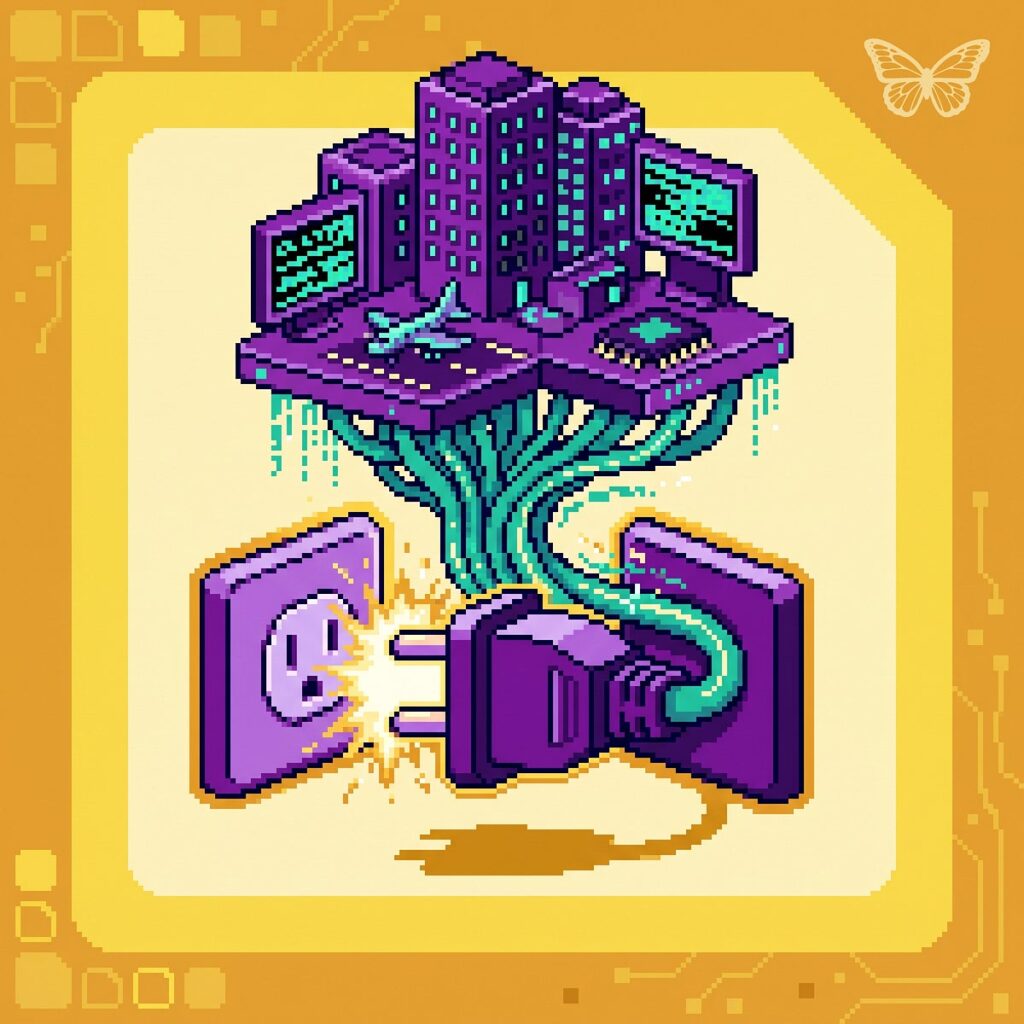
A Microsoft outage, air traffic chaos in the US and the exit of Nvidia’s CEO point to a new reality of connected systems, and to what we need to know to weather digital storms
By José Brito, founder of Pupa Educação Digital, teacher at the AI Lab of Colégio MOPI and director of JEDUCA, the Brazilian Association of Education Journalists.
Connected systems vulnerability became hard to ignore this week. If you leave home without your keys, you carry on; if you forget your phone, you go back for it, because so much of daily life runs through it. In a few days, ordinary failures in very large systems stopped email, meetings and airports in several countries.
The Microsoft outage lasted more than 30 hours and generated more than 7.4 million reports on Downdetector, according to Folhapress, hitting Outlook, Teams and Copilot. In the United States, the air traffic control failure left more than 10,000 flights delayed and at least 4,000 cancelled, according to Al Jazeera.
Quote of the week
“What is the minimum viable service or the minimum viable product that we need to keep up if there’s a global outage?”
Walter Pasquarelli, associate researcher at the Bennett School of Public Policy, University of Cambridge, speaking to Al Jazeera.
Connected systems vulnerability: what else is in issue 47
- Brazil’s Ministry of Education (MEC) approves the national guidelines on AI in education, and schools have 12 months to comply.
- Gemini and Search will be off by default on Google student accounts, and schools must teach research when the answer already comes summarized.
- Pupa takes part in the 4th Brazilian Media Education Week with a live session at the Science Film Festival.
- CERT.br, Brazil’s national computer security incident response team, updates its internet safety guides for children and families to cover generative AI and deepfakes.
Reading tip
A dança de Elisa (Elisa’s Dance), by Míriam Leitão (Intrínseca, 2026). Available in Portuguese. In the author’s second novel, a ballerina gathers friends into a resistance network, in a dystopia that shows what is at stake when disinformation and online hate become instruments of power.
Read the full issue 47 on Radar Pupa (in Portuguese)
Radar Pupa is José Brito’s weekly newsletter on learning with AI, digital culture and the future of work. Subscription is free.
This post was prepared and reviewed with AI automations by Claude Cowork, based on José Brito’s original issue on Substack.