


 PT

Demand for new AI skills grows alongside dialogue with communities in different territories, with a focus on potential impact with or without technology.
By José Brito, founder of Pupa Educação Digital, professor at the AI Lab of Colégio MOPI and director of JEDUCA, the Brazilian Association of Education Journalists.
This was a week of plenty of road under our feet, of conversations that warm the heart and of active listening. That is how I felt during the seminars on the future of work and the educommunication workshops I have been running with my colleague Alexandre Sayad for Itaipu Binacional. We were recently with more than 5,000 young people across municipalities in Paraná and Mato Grosso do Sul. This time we passed through Cornélio Procópio, Jacarezinho, Ivaiporã and Cascavel.
We left every gathering with the same perception: there is an increasingly latent demand for new skills for the world of work. And there is barely any need to revisit the data I keep bringing here about the World Economic Forum, or the consultancy indicators that help us understand the picture of skills and competencies companies want all over the world. When the conversation about technology connects with a local agenda, one that truly matters to the people in the room, about public policy, social participation, the future of a profession, that is the moment engagement shifts to another level and the search for information takes on meaning.
Quote of the week
“Artificial intelligence has stopped being a trend. Today it is already a strategic competency inside companies. More than mastering tools, the market needs professionals capable of using technology with critical sense, responsibility and a human vision. And it is precisely in this scenario that the course is born, focused on preparing people and teams to turn technology into real impact for businesses and for society.”
Isabela Esteves, founding partner of Lamparina Sustentabilidade e Comunicação.
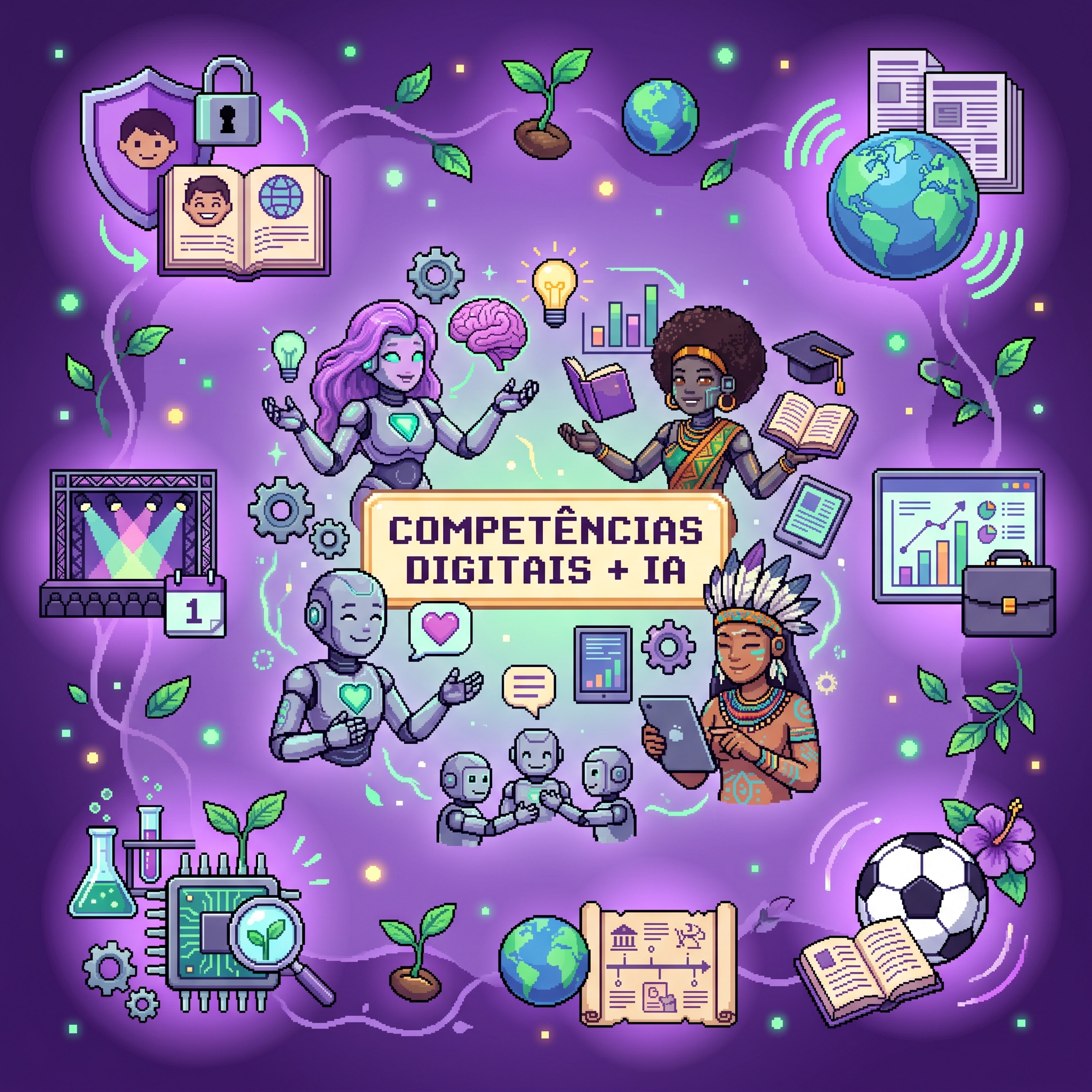
Digital skills and what else is in Radar Pupa issue 30
- Digital citizenship gains free material for educators
- UNESCO MIL Alliance opens a call for new chapters
- REC’n’Play prepares its September edition at Porto Digital
- Virgílio Almeida analyzes AI’s disruption of the labor market
- FAPESP launches the first call of its program in Computer Science with AI
Reading tip
Futebol Lado B, by Ariel Palacios (Globo Livros, 2026). Available in Portuguese.
At Pupa, this topic is part of PUPA MAX, for companies, teams and institutions.
Read the full issue 30 on Radar Pupa (in Portuguese)
Radar Pupa is José Brito’s weekly newsletter on learning with AI, digital culture and the future of work. Subscription is free.
This post was prepared and reviewed with AI automations by Claude Cowork, based on José Brito’s original issue on Substack.