


 PT
PT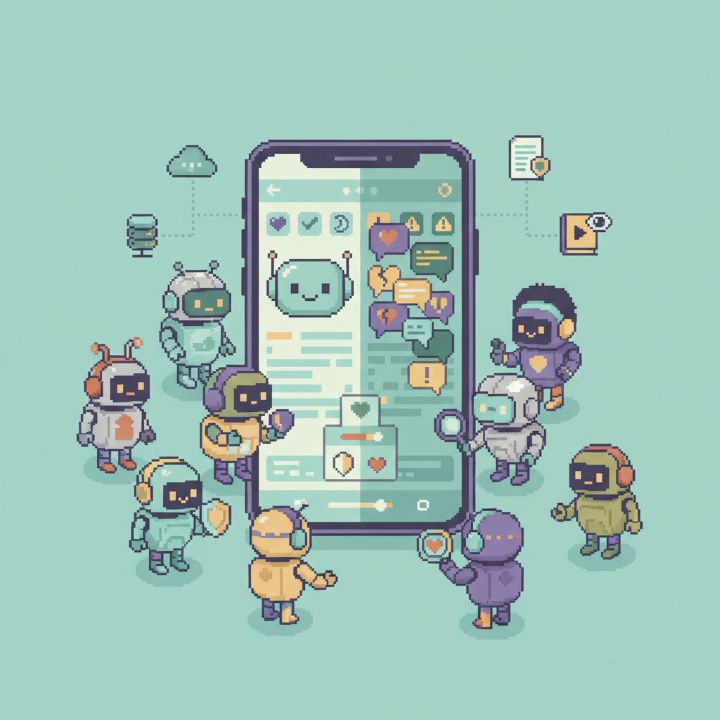
Study highlights gender bias in AI companion apps and the urgent need for critical digital education—especially for boys
Photo by: UNICEF
Hello, everyone! Wishing you all a great week ahead.
By José Brito, journalist and founder of Pupa Educação Digital
“While platforms may display disclaimers, such warnings can be insufficient when children—still developing their critical thinking skills—are involved. Incapable of detecting inaccuracies or manipulation, young users face increased risks of misinformation and emotional harm from technologies that are implicitly trusted to be objective and reliable.”
Samia Firmino, AI and Ethics researcher, expert in Digital Governance
Raise your hand if you’ve ever felt the need to confide in someone or keep a secret—even in the safest of spaces like work, home, or school. Maybe you’ve felt that sometimes, silence speaks louder than words. Well, here’s a little secret that isn’t really a secret at all.
Let’s kick off this edition with a quote from Samia Firmino, a researcher specialized in the critical intersection between innovation, AI, and child protection online. I just finished reading her interview for UNICEF—shared by my colleague Guilherme Cintra, Director of Innovation and Technology at Fundação Lemann—in our working group on AI and education.
In her remarks, Samia issues a critical warning about the blurred boundaries between humans and machines, particularly when the humans involved are still developing—like children and teens born after 2010 who are essentially AI-native. According to research from Common Sense Media, FOSI, and Kaspersky, 7 out of 10 American teens (ages 13–17) have used at least one generative AI tool. Among them, 42% used it to fight boredom, 18% sought personal advice, and 15% turned to it for companionship. In Japan, half of teens say they want AI to provide emotional support. Just imagine the potential risks of unsupervised child-machine interactions. Samia has analyzed over 100 such AI models in the past year. Her findings are a must-read—see the link below.
Around the same time, I came across a powerful column by Brazilian activist Preto Zezé in O Globo. His story touches on a related danger raised by Samia’s research: the rise of hyperfeminized, submissive AI companions—designed for romantic or even sexualized interaction—and the harmful influence they can have on boys, reinforcing dominance, unrealistic standards, and misogyny. Zezé recalls asking his son to make his bed, only to hear, “But isn’t a woman coming here to do that, Dad?” That everyday moment sparked the question: What kind of sons are we raising? In homes unaware of their own failings. In schools that avoid conversations about gender. In a society that stays silent when the abuser is a “good dad” or “polite neighbor.” Who are these men who harm women’s bodies? Who were they as boys? Who are the boys in our homes right now?
So I leave you with these two questions:
What kind of companionship do we want between humans and machines?
What kind of society are we building—online and off?
Let’s keep moving forward.
Foto: UNICEF/UN0473755/Gelman / VII Photo

Link: [UNICEF]

Link: [G1]
Link: [Casa FIRJAN]
Link: [Exame]
Link: [Instagram]
If you’re looking for an updated list of the bestsellers from this year’s 23rd Paraty International Literary Festival (FLIP), don’t worry—we’ve got you covered. Check out the full list [here].
As I gear up for a two-month journey across Paraná and Mato Grosso do Sul for a media literacy and climate-focused misinformation project, I’ve already packed this gem by Valter Hugo Mãe, a Portuguese writer born in Angola.
This book is a brief but profound meditation on empathy—something sorely needed today. It reminded me of everyday life, of partnerships, of early morning coffee with loved ones. Told through the innocent lens of a child, it’s a poetic take on how we see each other, how we imagine paradise, and how we choose to exist together despite our differences. It’s a reminder that paradise is not a place—it’s a perspective.
Love u!
» The Paradise Is the Others
Author: Valter Hugo Mãe
Publisher: Biblioteca Azul
2018
